If Fullerton home prices have you wondering how to buy without stretching every dollar too thin, house hacking may be worth a serious look. Living in one unit and renting the other can help offset your monthly housing costs, but it only works when the numbers, property type, and financing all line up. In this guide, you’ll see how house hacking works in Fullerton, what property options to watch for, and where buyers often need to be extra careful. Let’s dive in.
Why house hacking stands out in Fullerton
Fullerton is not a low-cost ownership market. Census QuickFacts reports a 51.8% owner-occupied housing unit rate, a median value of $902,600 for owner-occupied homes, and median monthly owner costs with a mortgage of $3,317.
That is exactly why many buyers look at duplexes, triplexes, and fourplexes a little differently. Instead of relying on one household income alone, you may be able to use rent from the other unit or units to make ownership more workable.
The key is staying realistic. House hacking is not a shortcut around affordability. It is a strategy that can improve your monthly picture if you buy the right property, use conservative rent estimates, and plan for vacancy and maintenance.
What counts as house hacking
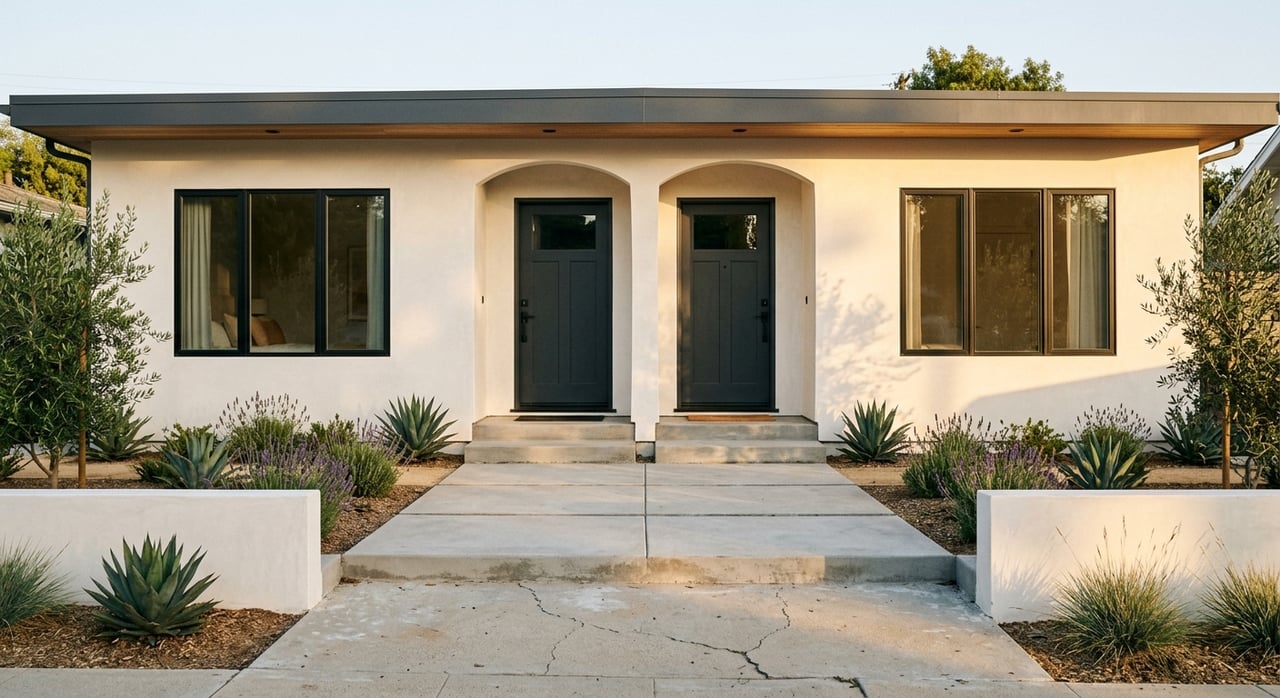
In simple terms, house hacking means you buy a property, live in one unit as your primary residence, and rent out the other unit or units. In Fullerton, that often means looking at a duplex, triplex, or fourplex rather than a standard single-family home.
This setup can appeal to both first-time buyers and small investors who want to start with an owner-occupied purchase. You get a place to live, plus the chance to offset part of your housing payment with rental income.
Fullerton property types to know
Fullerton’s housing element identifies several residential zoning categories. The city includes single-family zones such as R-1 and R-1P, two-family zones such as R-2 and R-2P, and multiple-family zones including R-G, R-3R, R-3P, R-3, R-4, R-5, and R-MH.
For house hacking, the main targets are usually duplexes, triplexes, fourplexes, and other small multi-unit properties. Fullerton’s housing materials state that two-family homes are allowed in both two-family and multi-family zones, while multi-family developments are allowed by right in multi-family zones.
That said, zoning labels are only part of the story. Parking, garage requirements, and site layout can affect whether a property works for your goals, especially if you are comparing older properties with different unit configurations.
Why duplex rules matter
In Fullerton, R-2 and R-2P parcels are limited to two dwelling units per legal parcel. City housing materials also note garage-space requirements per unit for duplex projects in those zones.
For buyers, that means a duplex can look simpler on paper than it is in practice. Before you move forward, it helps to confirm how the existing layout fits the parcel, parking setup, and legal unit count.
Financing basics for owner-occupied multi-unit homes
The biggest financing rule is straightforward: you must occupy one of the units. That owner-occupancy requirement is central to the house-hacking strategy and affects which loan options may be available.
HUD says FHA 203(b) loans are for a principal residence and can be used on one- to four-unit properties. These loans can require as little as 3.5% down, which is one reason they often come up in house-hacking conversations.
Conventional financing can also work. Fannie Mae says rental income from the subject property may be used when you occupy one unit of a two- to four-unit principal residence, subject to lender documentation requirements.
Orange County loan limits matter
In a market like Fullerton, loan limits are not just background details. They can shape which properties are realistically within reach.
According to FHFA’s 2026 conforming loan limits for Orange County, the limits are:
- 1 unit: $1,249,125
- 2 units: $1,599,375
- 3 units: $1,933,200
- 4 units: $2,402,625
Those higher limits for multi-unit properties can create more room for buyers comparing a duplex or triplex to a similarly priced single-family home. Even so, qualification still depends on your income, debts, reserves, and the lender’s treatment of projected rent.
Can rental income help you qualify?
Often, yes. Fannie Mae says rental income from the property may be used when the borrower occupies one unit of a two- to four-unit principal residence.
Lenders do not usually count every dollar of projected rent. Fannie Mae notes that lenders generally calculate eligible rent at 75% of gross monthly rent from a lease or market-rent form to account for vacancy and maintenance.
That 75% approach is a helpful way to think about the property before you make an offer. If the deal only works when you count 100% of future rent, the numbers may be too tight.
Why duplexes and triplexes can qualify differently
Not all multi-unit properties are underwritten the same way. A duplex may be easier to qualify for than a triplex or fourplex, especially with FHA financing.
HUD says FHA applies a self-sufficiency test to three- and four-unit purchases. Under that test, the property’s PITI divided by its net self-sufficiency rental income may not exceed 100%, and net income is based on the appraiser’s fair-market-rent estimate for all units, less the greater of the appraiser’s vacancy and maintenance estimate or 25% of fair-market rent.
In plain English, FHA expects a three- or four-unit property to support itself more clearly on paper. That is a major reason some buyers find a duplex more approachable than a larger building.
How to run the numbers conservatively
A smart house-hacking analysis starts with restraint, not optimism. The goal is to understand whether the property still makes sense after normal ownership costs and likely rental gaps are accounted for.
A practical model looks something like this:
- Estimate gross rent from the non-owner unit or units.
- Reduce that figure using a lender-style cushion, such as 75% of gross rent.
- Compare that adjusted rent to the full monthly housing payment.
- Include taxes, insurance, and any HOA fees if they apply.
- Leave room for maintenance, repairs, and periods without a tenant.
This does not replace lender underwriting, but it gives you a more grounded way to screen opportunities. It also helps you avoid treating projected rent like guaranteed monthly cash flow.
Don’t forget the upfront cash needed
Your down payment is only one part of the budget. Fannie Mae says closing costs typically run 2% to 5% of the purchase price.
You should also plan for the full monthly housing payment, which may include principal, interest, taxes, insurance, and possibly HOA fees. On top of that, Fannie Mae says homeowners should keep three to six months of essential expenses in reserve.
That reserve cushion matters even more with house hacking. If a unit sits vacant or needs repairs soon after closing, reserves can keep a manageable plan from turning into a stressful one.
Assistance programs to explore
Some buyers may qualify for additional help with upfront costs. Orange County’s Mortgage Assistance Program is income- and price-capped for some low-income first-time buyers.
CalHFA’s MyHome program also offers deferred junior-loan assistance of up to 3.5% of the purchase price or appraised value on FHA-backed loans. If you are exploring these options, it helps to review eligibility early so you know how they fit with your price range and financing plan.
California rent rules to understand
If you plan to rent out part of the property, statewide rental rules matter. California’s Tenant Protection Act caps many covered rent increases at 5% plus CPI or 10%, whichever is lower.
California Courts and the Department of Real Estate also explain that an owner-occupied duplex is exempt while the owner continues to live in the other unit. Housing that is less than 15 years old is also exempt under the statewide baseline described in the research.
Even with those statewide rules, details still matter. Local ordinances can be stricter, so it is important to confirm how the property is classified and which rules apply before you rely on a future rent plan.
What makes a good house hack in Fullerton
The best house-hack opportunities are not always the flashiest listings. Usually, the strongest candidates combine a workable purchase price, a practical layout, clear legal use, and rent that supports the payment without heroic assumptions.
When you evaluate options, focus on:
- Unit mix: How many units are there, and which one would you occupy?
- Parking and garages: Does the setup match the property type and likely tenant needs?
- Monthly payment: What does the full payment look like after taxes and insurance?
- Rent realism: What is a conservative estimate after a vacancy and maintenance cushion?
- Property condition: Will repairs eat into your reserve funds right away?
- Financing fit: Is the property better suited for FHA or conventional financing?
In Fullerton, small differences in layout, zoning, or rental math can change whether a property feels manageable. That is why local guidance can be especially valuable when comparing one duplex or triplex to another.
When house hacking may not be the right fit
House hacking can be a smart path, but it is not for everyone. If you want complete privacy, dislike the idea of managing a nearby rental unit, or have very limited cash reserves, the tradeoffs may outweigh the benefits.
It may also be a tougher fit if the property only works with aggressive rent assumptions. In a higher-cost market like Fullerton, discipline matters more than excitement.
If you are considering a duplex or small multi-unit property in Fullerton, working through the numbers carefully can save you time and protect your budget. If you want help comparing owner-occupied multi-unit options in Orange County, Kevin Kott can help you evaluate listings, financing fit, and the local details that matter.
FAQs
Can house hacking in Fullerton help lower my monthly housing cost?
- Yes, renting out the other unit or units can help offset your monthly payment, but the strategy works best when you use conservative rent estimates and account for vacancy, maintenance, taxes, insurance, and other ownership costs.
Can rental income from a Fullerton duplex help me qualify for a loan?
- Often yes, if you will occupy one unit and the lender can document rental income using the required lease or market-rent forms.
Is buying a Fullerton triplex harder than buying a duplex with FHA?
- Often yes, because HUD applies a self-sufficiency test to FHA purchases of three- and four-unit properties, which can make qualification stricter than it is for a duplex.
What property types work best for house hacking in Fullerton?
- Duplexes, triplexes, fourplexes, and other small multi-unit properties are usually the main house-hacking targets because Fullerton’s zoning framework allows two-family and multi-family housing in the relevant residential zones.
Do California rent rules apply if I live in one unit of the property?
- Often yes, but California’s statewide rules include an exemption for an owner-occupied duplex while the owner continues to live in the other unit, and newer housing may also be exempt under the statewide baseline.
How much cash should I plan for when house hacking in Fullerton?
- In addition to the down payment, Fannie Mae says closing costs often run 2% to 5% of the purchase price, and homeowners should aim to keep three to six months of essential expenses in reserve.