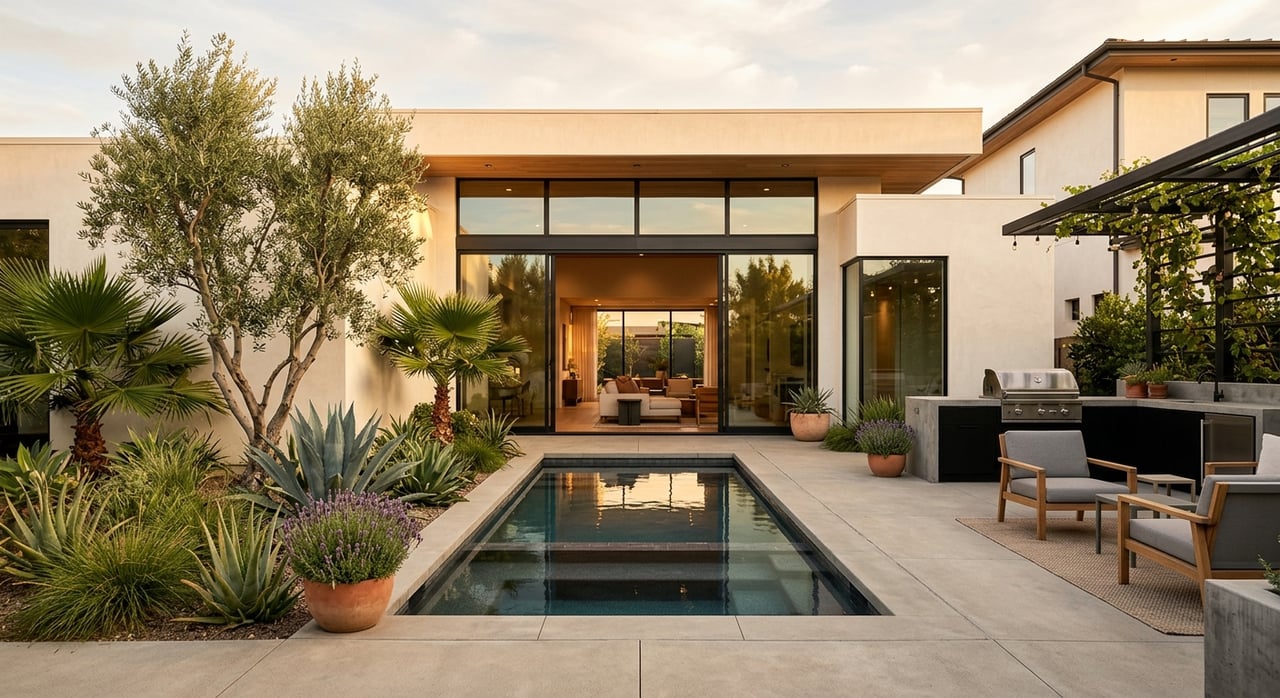
Wondering what it’s really like to live in Costa Mesa? If you are comparing Orange County cities, Costa Mesa stands out for its mix of neighborhood variety, standout dining, arts and shopping, and practical regional access. Understanding how those pieces fit together can help you decide whether this compact, amenity-rich city matches your lifestyle, budget, and daily routine. Let’s dive in.
Why Costa Mesa Stands Out
Costa Mesa sits in northwest Orange County, bordered by Huntington Beach, Santa Ana, Irvine, and Newport Beach, with the Pacific Ocean about a mile south. The city covers about 15.8 square miles, which gives it a more connected, corridor-based feel than many larger suburban cities.
That compact footprint shapes everyday life. You are not dealing with a spread-out city where everything is far apart. Instead, Costa Mesa tends to feel active, convenient, and full of destinations packed into a relatively small area.
The city’s 2025 population estimate is 108,881, with 42,292 households. Census QuickFacts also reports a median household income of $111,505, a mean commute time of 22.4 minutes, a median owner-occupied home value of $1,115,100, a median gross rent of $2,446, and an owner-occupied housing rate of 39.6%.
That last figure matters if you are trying to understand the housing mix. Costa Mesa has a strong renter presence alongside homeowners, so condos, townhomes, apartments, and single-family homes all play a visible role in the local market.
Costa Mesa Neighborhoods at a Glance
Costa Mesa’s General Plan identifies seven residential neighborhoods:
- Eastside
- Westside
- Mesa Verde
- College Park
- North Costa Mesa/Mesa Del Mar/Halecrest Hall of Fame
- Bristol/Paularino
- South Coast/Wimbledon Village
The city is also about 99 percent built out. In practical terms, that means you are more likely to see infill development and mixed housing types than large new single-family subdivisions.
Eastside and Westside Feel Established
Eastside and Westside are two of Costa Mesa’s classic infill districts. The city notes that single-family residential construction in these areas is primarily infill, which helps explain why these neighborhoods are often associated with older tract homes, smaller lots, and a more traditional residential feel.
If you are looking for a neighborhood setting that feels established rather than newly planned, these areas may stand out. They often appeal to buyers who want a more familiar street-and-home pattern within a city that still offers quick access to retail, restaurants, and major roads.
Mesa Verde Offers a Mixed Residential Pattern
Mesa Verde is described in the city’s General Plan as a mix of single-family and multifamily units, along with parks and schools. That combination gives it a more residential, day-to-day feel while still reflecting Costa Mesa’s overall housing diversity.
For buyers who want a neighborhood with a blend of housing types and nearby recreation, Mesa Verde is often part of the conversation. It reflects the way Costa Mesa supports everyday living, not just entertainment and shopping.
South Coast and Corridor Areas Are More Dense
If you picture Costa Mesa as a city of condos, apartments, and mixed-use living, you are likely thinking of areas near South Coast Metro and other major corridors. The city identifies higher-density housing clusters around Orange Coast College, Mesa Verde Drive East, Adams Avenue, Vanguard University, the northeast portion of South Coast Metro, downtown, and the southeast part of the city.
The South Coast Metro area stands out because it combines residential uses with major office buildings, shopping, and arts destinations. That creates a more urban, convenience-driven lifestyle where housing is closely tied to employment, dining, retail, and entertainment.
What Housing Looks Like in Costa Mesa
Costa Mesa has more multifamily units than single-family units, according to the city’s land-use analysis. Combined with the 39.6% owner-occupied rate, that tells you the market includes a meaningful share of renters, condo owners, and buyers looking for lower-maintenance options.
This is useful if you are deciding between Costa Mesa and a more suburban, single-family-heavy city. In Costa Mesa, condos and townhomes are a major part of the housing story, especially near South Coast Metro and mixed-use corridors.
That variety can be a plus for first-time buyers, move-up buyers, downsizers, and some small investors. It also means your home search often comes down to the kind of lifestyle you want, not just square footage.
Dining and Shopping Are Major Draws
Costa Mesa has built a strong identity around dining, shopping, and culture. The city highlights The LAB, The CAMP, and SoCo Collection as key lifestyle destinations, while South Coast Plaza remains one of the area’s biggest retail anchors.
South Coast Plaza says it offers more than 230 boutiques and world-class dining. Its dining lineup includes more than 30 eateries, including Knife Pleat, which South Coast Plaza identifies as Orange County’s only Michelin-starred French restaurant.
That does not mean daily life in Costa Mesa revolves only around luxury shopping. It means you have access to both high-profile destinations and a broad range of casual, corridor-based everyday options.
The City Functions Through Corridors
Costa Mesa does not revolve around one single downtown core. The city’s main commercial corridors include South Coast, Bristol Street, Harbor Boulevard, East 17th Street, Newport Boulevard, and West 19th Street.
For you as a resident, that usually means errands, meals, coffee stops, and shopping trips happen across several nodes. Over time, many locals build routines around a few favorite corridors rather than one central district.
The Triangle Adds Another Entertainment Hub
The Triangle is another well-known Costa Mesa destination for dining and entertainment. Current and planned offerings listed by the city include Yard House, Sushi Zen, Creamistry, Saddle Ranch Chop House, El Corazon, and Olive Branch Pizza.
This adds another layer to the city’s lifestyle mix. If you want options for casual meals, group outings, or easy weeknight plans, Costa Mesa gives you several distinct pockets to choose from.
Costa Mesa Has a Strong Arts Identity
Costa Mesa’s official motto is the City of the Arts, and that is more than branding. The city’s Theater District includes Segerstrom Center for the Arts, South Coast Repertory, and the Orange County Museum of Art.
The city also points to Pacific Chorale, Pacific Symphony, the Philharmonic Society of Orange County, public art in South Coast Metro, the Noguchi Sculpture Gardens, and the Orange County Fair and Event Center. For a city of this size, that is an unusually deep arts and culture lineup.
If arts access matters to you, Costa Mesa offers a lifestyle that feels more layered than a typical suburban shopping city. You can have a regular neighborhood routine and still be close to major performances, exhibits, and cultural events.
Parks and Outdoor Routine
Costa Mesa balances its urban feel with a solid park system. The city operates and maintains 30 parks, and 21 of them are reservable.
Fairview Park is the largest at 208 acres. The city describes it as a regional gateway to the Santa Ana River Trail and nearby Talbert Regional Park, with 7 miles of trails for walking and bicycling.
The city also lists the Costa Mesa Country Club, Tennis Center, Bark Park, skate park, and the Santa Ana River Trail as recurring recreation amenities. That gives residents more than just indoor dining and retail options.
Everyday Life Is Easy to Picture
For many buyers and renters, the real question is not whether a city has attractions. It is whether your everyday rhythm will feel manageable and enjoyable.
Costa Mesa offers a mix of park walks, bike rides, dog outings, tennis, golf, youth recreation programs, libraries, and public schools. The city notes that it has 20 public schools and three libraries, which adds useful day-to-day infrastructure to its lifestyle appeal.
What Commutes Are Like in Costa Mesa
Costa Mesa is well placed for regional travel, but commuting comes with tradeoffs. The city sits on three major transportation corridors: I-405, SR-73, and SR-55.
That location supports access to other parts of Orange County and beyond. At the same time, the city notes that I-405 is one of the most congested freeways in Orange County, and SR-55 is one of the most heavily congested freeways in Southern California.
If you plan to commute by car, route timing matters. Your experience can vary quite a bit depending on where in Costa Mesa you live and which corridor you use most often.
Transit Options Exist Along Main Routes
Costa Mesa is still car-oriented for many residents, but transit connections are meaningful along major corridors. OCTA shows direct bus service on Route 55, Route 57, Route 150, Route 151, Route 543, and Route 553.
That gives you public transit options for certain commute patterns and local trips, especially if you live near a main route. Even if you drive most of the time, bus service can still be a helpful backup for some trips.
Is Costa Mesa a Good Fit for You?
Costa Mesa tends to work best if you want a city that feels active, connected, and full of options. It is especially compelling if you like having dining, shopping, arts venues, parks, and regional access close together.
From a housing perspective, the city offers two broad lifestyle paths. You may prefer mixed-use, condo- and apartment-heavy areas around South Coast Metro and major corridors, or you may lean toward older single-family neighborhood pockets such as Eastside, Westside, or Mesa Verde.
That variety is a big part of Costa Mesa’s appeal. You can find different ways to live within the same city, whether you prioritize convenience, neighborhood feel, lower-maintenance housing, or access to arts and recreation.
If you are thinking about buying, selling, or investing in Costa Mesa, local guidance can make a big difference. Neighborhood feel, housing type, commute patterns, and pricing can vary a lot block by block. For tailored advice on Costa Mesa homes, condos, and small investment opportunities, connect with Kevin Kott.
FAQs
What is Costa Mesa known for as a place to live?
- Costa Mesa is known for its compact layout, varied neighborhoods, major shopping and dining destinations, strong arts presence, and access to regional transportation corridors.
What types of homes are common in Costa Mesa?
- Costa Mesa includes a mix of single-family homes, condos, townhomes, apartments, and other multifamily housing, with more multifamily units than single-family units overall.
Which Costa Mesa areas feel more residential?
- Eastside, Westside, and Mesa Verde are often associated with a more established residential feel, while South Coast Metro and corridor-adjacent areas tend to include denser housing patterns.
What is the commute like from Costa Mesa?
- Costa Mesa has access to I-405, SR-73, and SR-55, which helps with regional travel, but freeway congestion can be significant depending on your route and timing.
Does Costa Mesa have public transit options?
- Yes. OCTA provides direct bus service through several routes serving Costa Mesa, including Routes 55, 57, 150, 151, 543, and 553.
Are there parks and outdoor spaces in Costa Mesa?
- Yes. The city maintains 30 parks, including Fairview Park, and offers access to amenities such as trails, tennis, golf, a bark park, and the Santa Ana River Trail.